
You can restream HLS, RTMP, HTTP MPEG-DASH & RTSP. Each protocol has its own advantages, such as HLS being widely supported across devices and RTMP providing low latency for live broadcasts. Understanding these protocols will help you choose the best one for your use case.
To create a Pull stream, please log into your 5centsCDN dashboard. Before you start, ensure you have a valid source stream URL ready, as this will be essential for setting up your pull stream correctly and efficiently.
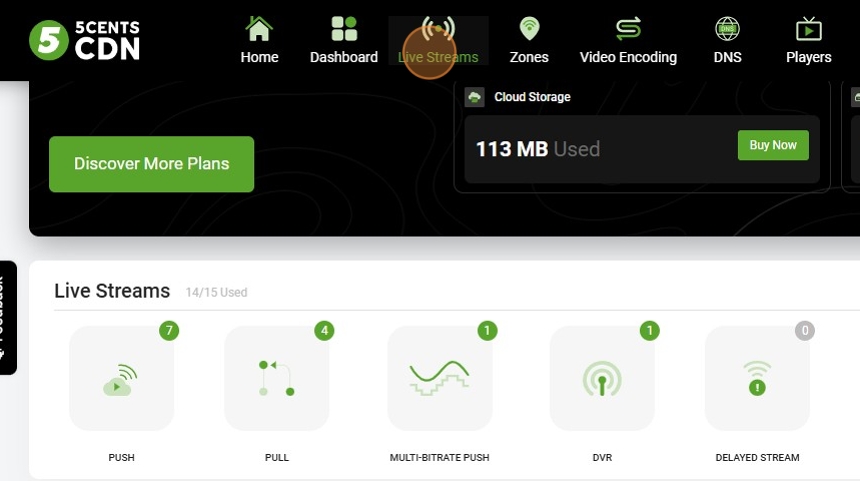
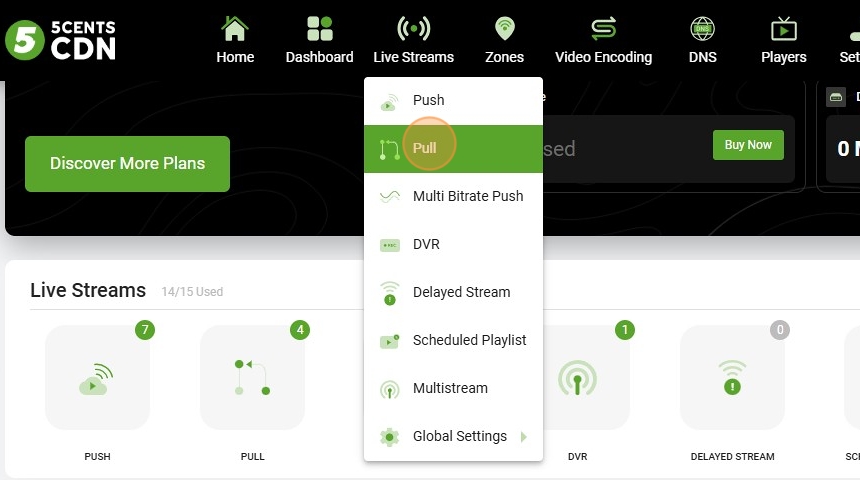
- Under live streams click on the Pull option.
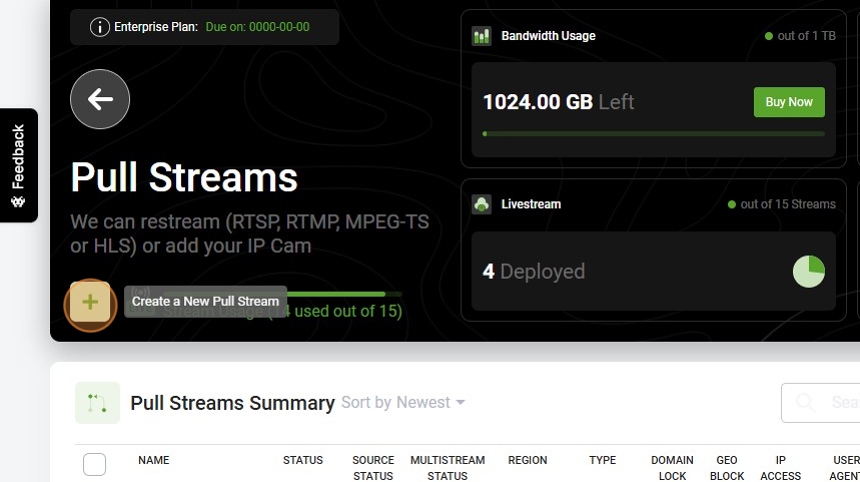
- Click on the Green Plus Button (add a new Pull stream) located at the extreme top left corner of the screen.
- In the popup window please provide the Stream Name. If the name given is not already used will be accepted.
- Select the Pull Server Region which is geographically located near to your source from the drop-down menu.
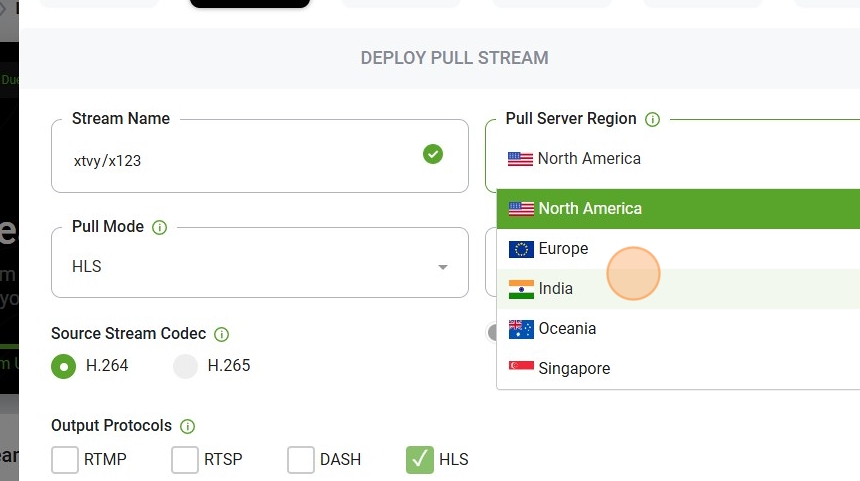
- In pull mode you can select the type of your source(HLS,RTMP,HTTP,RTSP)
- Under the source add your source URL and click the green plus button to save the source.
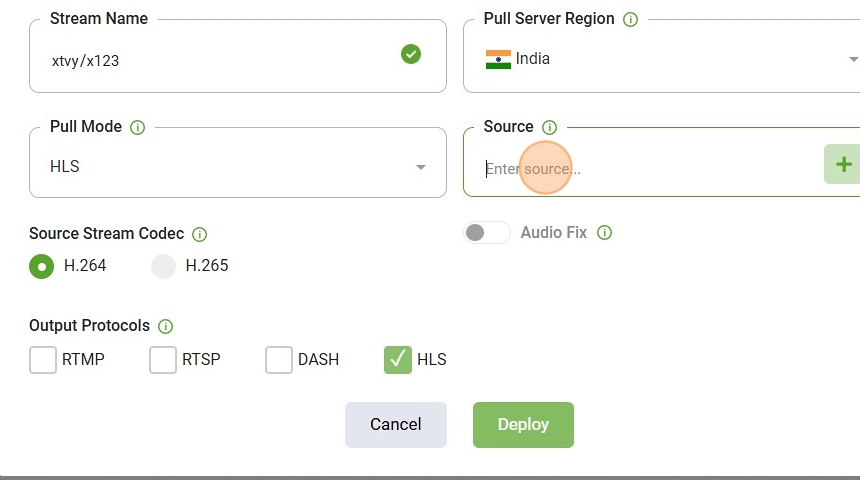
- Scroll down the page and click on the Deploy button.
- Success! Stream Created message will be displayed upon successful creation.
On successful creation, the Restream stream details will be available under Live Streams > Pull. Here, you can manage your streams, view analytics, and make adjustments as necessary to optimize performance.
Understanding the various options available when creating a Pull stream can significantly enhance your streaming experience. For instance, considering the geographical location of your audience can help in selecting the optimal Pull Server Region.
After the zone is deployed, you will get a CDN playback link. This link is crucial for sharing your stream with your audience. You can also refer to our Guide link for more details – How to create your first Live Stream Pull. Understanding how to use this link effectively can enhance your stream’s reach and viewer engagement.
When selecting the type of source (HLS, RTMP, HTTP, RTSP), consider your audience and the devices they use. For example, HLS is ideal for streaming on mobile devices due to its adaptive bitrate feature, which adjusts video quality based on the user’s internet speed.
After saving your source, take a moment to review all the settings you’ve configured. This step can help you avoid common pitfalls that may lead to stream interruptions or quality issues.